Judit Reis - New Horizons Pluto Mission
Posted by Karen Bogisch
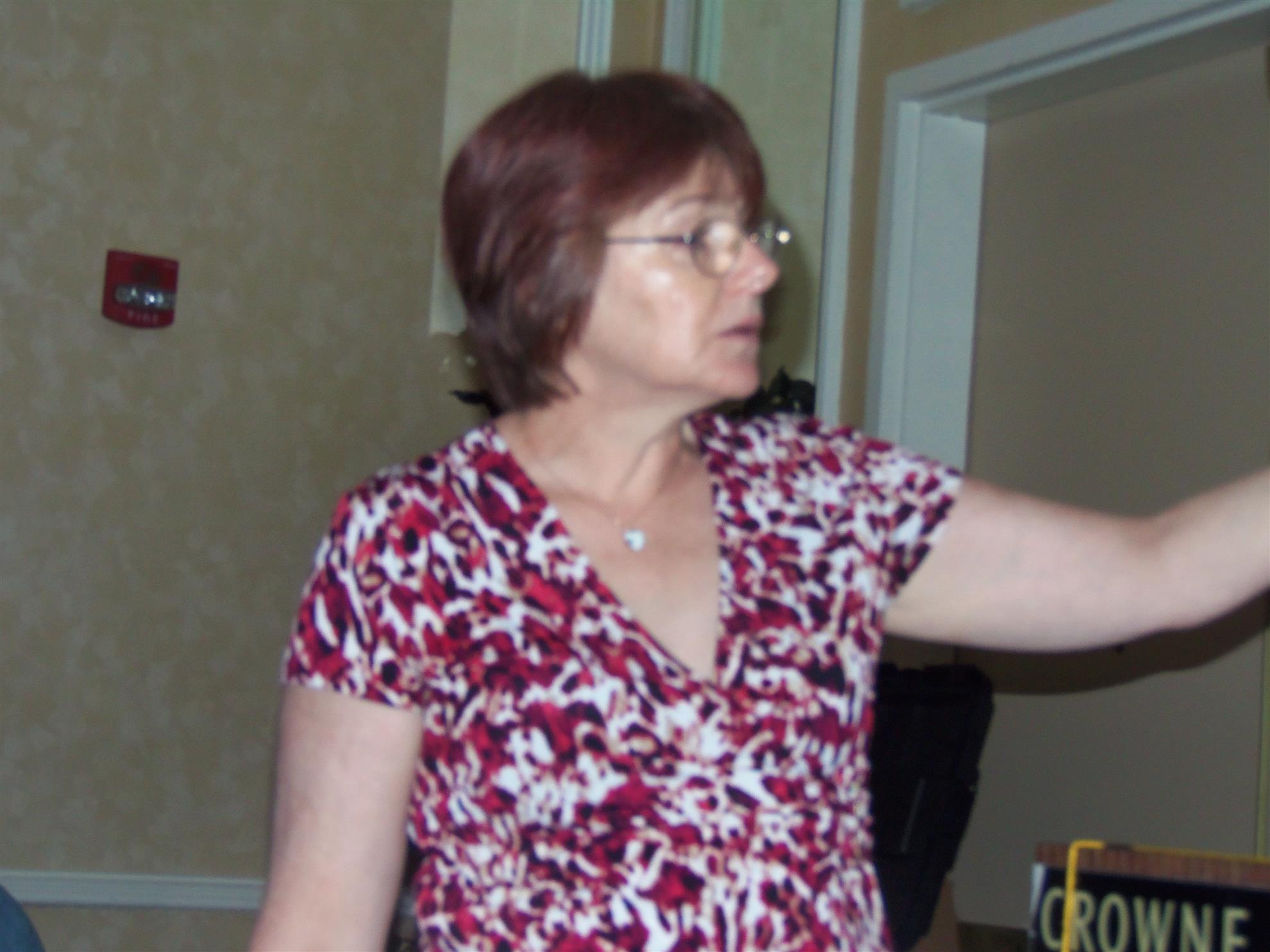
Our speaker on August 17 was Dr. Judit Reis from UT's astronomy department, who brought us an informative presentation about Pluto and the New Horizons mission. She gave us some background facts about Pluto including -- it has a 248 year orbit of the sun, which is elongated, and it also rotates on its side, unlike Earth. Dr. Reis showed us pictures of Pluto that were taken by the Hubble telescope.
The New Horizons mission was not easy to get project going. It's launch date was Jan 2006, and it reached Pluto this year. It is small (half the size of bus) and goes really fast, which was needed to catch Pluto before it got farther away from sun. New Horizons was closest to Pluto on July 14, 2015, and had 7 - 10 hours to make observations. Dr. Reis showed New Horizons' images of Pluto and Charon. Pluto has a smooth surface with almost no craters in places that looked like they were covered with glaciers, and mountains were also found. Pluto and Charon system may be similar to earth and moon, but because of the distance the data download from New Horizons won't be complete until November.
The New Horizons mission was not easy to get project going. It's launch date was Jan 2006, and it reached Pluto this year. It is small (half the size of bus) and goes really fast, which was needed to catch Pluto before it got farther away from sun. New Horizons was closest to Pluto on July 14, 2015, and had 7 - 10 hours to make observations. Dr. Reis showed New Horizons' images of Pluto and Charon. Pluto has a smooth surface with almost no craters in places that looked like they were covered with glaciers, and mountains were also found. Pluto and Charon system may be similar to earth and moon, but because of the distance the data download from New Horizons won't be complete until November.